Artist and writer passionate about the arts. I was born in Pāpua New Guinea, lived in Sydney briefly and have spent much of my life researching my Māori and Polynesian heritage in the Asia Pacific region. I have a Doctorate in Art History but began my professional training with a year at Elam School of Fine Arts, Auckland.
My work as a Curator, as an educator and as an art historian feeds into my visual arts practice. I am currently involved in an international project 'Provocations for a New Art History' to be published by De Gruyter, led by James Elkins (SAIC) and including 18 other scholars from around the globe. I am also working with Batemans (NZ) on 'MAORI ART: How to Read It' a follow-up to MAORI ART: History, Architecture, Landscape and Theory (2015/2018).
I have written for a number of New Zealand photographers including more recently, 'A Vocabulary' Bruce Connew (Vapour Momenta Books 2021) 'Viewshaft' Allan McDonald (Rim Books 2023) 'A Selective Eye: Photographs by Richard Wotton' (Richard Wotton & Rim Books 2026). Rangihīroa's most recent art exhibitions are 'Tāne Motumotu' Mt Albert Public Library Tāmaki, 2023, He MAURI, MODAL, Ōwairaka, Tāmaki 2024 and Te RONGO Crave, Morningside, Tāmaki 2026.
I love propagating, growing with and learning from native plants and trees, helping with native forest regeneration and planning a return to land in Te Tai Tokerau 'Northland' where my collection can find roots.
Rangihīroa Panoho 2016-2024. No part of this document (text or imagery) is free to be copied, plagiarised or shared for publication or for uses neither intended nor agreed on by the author without his express permission. Details for writing to Rangihīroa are as follows:

blueskypanoho@icloud.com

The opinions expressed are entirely mine.
A U G U S T U S H A M I L T O N
104 years on: the book
that is always open
The following entry is an updated version of an article written for a LinkedIn audience in 2013 after documenting the Christ Church yard, Russell with Mark Adams. We were returning to Tāmaki, 22 September 2013, after photographing the Kaitaia Gateway (photo: Mark Adams, Pihirau collection), in Te Ahu Heritage Museum, Kaitaia for MAORI ART . I realised I needed this essay as a point of reference in the ‘Future Flowerings’ essay, MAORI ART Curator II so I have decided to publish it ahead of schedule. This essay helps explain the longer legacy of trying to write a history of Māori art and it has within it a range of lessons for current generations of writers wanting to write Māori art. It could be considered an extension of ideas covered in ‘Future Flowerings’ and Bulls and Territory This post on the pioneering Dominion Museum ethnologist helps better prepare the ground for a discussion regarding intellectual/curatorial territory and the ongoing delineation of space in the Polynesian Art/museum world – the focus of the next post: MaC V Headlands: unpublished responses
Down the end of a central access path to one of New Zealand’s oldest surviving ecclesiastical buildings – Christ Church, Kororāreka – resides a plump, largely unadorned, funerary stone. Its two simple bronze plaques facing the path remember Augustus Hamilton, (1853-1913). He died a century ago in the summer months researching church records in the North. The kohatu sits as if on outdoor museum display duty. Its own pedestal reminds the viewer a tribute worthy of study lies above. 5 carefully machined marble blocks hold the massive weight. A plaque in English reads indifferently to another in te reo below – the predicament of translation. The Māori text sits horizontally on the face of a plinth block facing out towards the path. The English plaque describes the deceased ‘Director of the Dominion Museum, Wellington, [as] ‘An Eminent Student of Māori Lore, A lover of Nature, an Earnest Seeker after Truth.’
Michael Illingworth, portrait of Augustus Hamilton, bronze statue five years before the ethnologists death in 1908. Behind Hamilton are kōwhaiwhai images reproduced in his voluminous Art Workmanship of the Māori Race
Hamilton’s grave is central foreground. Far left is a memorial to loyalist Hokianga rangatira Tamati Waaka Nene. Although Hamilton died at the early age of 50 (while researching in Northland) this particular, now relatively remote, graveyard seems an entirely appropriate resting place for the scientist with a passion for Māori art. Local Māori gifting the land in the early nineteenth century required the church cemetery allow for the burial of both Māori and Pākehā alongside one another. One can pick out the resting place in White’s image. Follow its perspectival entry point leading along the path to the west face of the church. In the left background of the image sits the slightly rough, pocked top edge of Hamilton’s grave. It is positioned against another pou whakamaharatanga ‘memorial.’ A lofty Celtic medieval cross emblazoned with the nomina sacra IHS – the Greco Roman abbreviation for Jesus – stands out. It is dedicated to prominent nineteenth century Hokianga rangatira Tamati Waka Nene.
Acknowledgemnts to those involved in helping promote, host and administer the Trans-Tasman display of Whatu Aho Rua
NGĀ WHAKAWHETAI
FUTURE FLOWERINGS
Every artform in the world springs from its local puna ‘fount’. Toi Tāhuhu [new Māori art history] is no exception. It involves the study of visual objects flowing from tataara te puna o Hawaiki…
Dr Rangihīroa Panoho, Maori Art, History, Architecture, Landscape and Theory, Batemans, 2015: 25
rangihīroa, pare puarangi, 2017
‘Toi Te Mana. A History of Indigenous Art from Aotearoa New Zealand’. This seeks to write the first comprehensive history of Māori art and investigate the relationships, continuities and commonalities between the art of the ancestors and their descendants using specially-developed art history and Kaupapa Māori methodologies.
Dr Ngarino Ellis, UoA
We are familiar with studies within Māori art history on meetinghouses, tā moko…Your book is in dialogue with a lot of your mentors, other art historians who have written about Māori art or who have commented on it in a way that has influenced its history. I thought the book was ahistorical, and absolutely brilliant in those terms, but was so much more…I thought it was an artist’s philosopher’s book. It is not just what you have written, it is what you have made.
Dr Peter Brunt, VUW, discussing Rangihīroa Panoho’s’Maori Art’ at ‘Writing Maori Art’, City Gallery, Wellington
...[Toi te Mana]will set an international precedent as the first comprehensive indigenous art history created by and with indigenous peoples, and aims to help redefine art history in a global context.
Dr Diedre Brown, UoA
In the late 1980s and early 1990s Māori museum and gallery appointments included: Ngahuia Te Awekotuku, Waikato Museum’s first Māori curator, in 1987. Te Warena Taua, assistant ethnologist at Auckland Museum, in 1989. Paora Tapsell, curator at the Rotorua Museum of Art and History, in 1990. Jonathan Mane-Wheoki, first curator Māori of Christchurch’s Robert McDougall Art Gallery, in 199[2].
Dr Paul Tapsell, ‘Māori and museums – ngā whare taonga – Increasing Māori involvement in museums, 1987 to 2000, Te Ara – the Encyclopedia of NZ, 22 October 2014
Nations and peoples are largely the stories that they feed themselves. If they tell themselves stories that are lies they will suffer the future consequences of those lies. If they tell themselves stories that face their own truths they will free their histories for future flowerings.
Nigerian poet Ben Okiri
One way ‘taste’ is articulated to the public is a careful rewriting of histories. Here it is not what is said that is of importance but rather that which is not. More particularly that which is deliberately left unsaid, or those people that are deliberately left out, is equally important. The unsaid is muted counterpoint and in Aotearoa ignoring, blocking, ridiculing, editing out, cutting off (whether blatantly or subtly) increasingly becomes the normal way of dealing with anyone deemed outside the group, anyone deemed to be professional competition, anyone perceived to be exploring narratives outside those endorsed or approved by the prevailing institution(s).
It was rather a shock at Jonathan Mane-Wheoki’s tangi at Piki Te Aroha mārae (state Highway 1, north of Ōkaihau, Te Tai Tokerau) 19 October 2014 to hear an Auckland academic announce a new Māori art history was being written and would soon be published. The surprise had nothing to do with the $635,000 award gained from a research fund originally led and secured by Mane-Wheoki (with Brown and Ellis). Rather, it was the assertion by Dr Peter Shand, Jonathan’s successor at Elam School of Fine Arts, that something was entirely new simply because a privileged clique had decided that this was so. When Shand made his announcement my book Māori Art: History, Architecture, Landscape and Theory was just nine months away from publication.
Since its launch, 11 June 2015 (and it’s 2nd edition in 2018), the only thing the book has not received is public recognition from some quarters of academia. Brown (an architectural historian) and Ellis (who trained in law) can pretend Maori Art doesn’t exist and that somehow by employing, ‘specially-developed art history and Kaupapa Māori methodologies’ they are tilling new soil. Both a recent University of Victoria conference importantly remembering Mane-Wheoki and a Te Papa post rather hopefully note (I reference the latter here), for example, that, ‘Toi Te Mana…promises to rewrite Māori art history since 1840, giving it both a scholarly foundation and increased public accessibility.’
Underneath all the semantics (i.e about Māori methodologies, specially developed indigeneity and scholarly foundation, specially self-selected committees selectively apportioning approval and dishing out public funding and increasing public access) and promises the same old plant is being cultivated with the hope that grafting branches and re-naming the same old tree is going to grow something new. The Brown and Ellis claims have little substance and they and their backers’ efforts to re-market and dress up the same art history (or worse wreck it and put it under another discipline) are not altruistic but rather about gatekeeping. Renaming or re-branding the same old research and the same old concepts will not make the plant grow or flower other than it always has. Toi Tāhuhu (i.e. what I have already described in my pioneering 1988 and 2003 theses and in my 2015/2018 book as Māori art history – see definition above) is neither new nor ‘emerging’. It has already been well and truly seeded. It has already grown and it has already flowered. It has already been written and celebrated a number of times in the very same institution now making this fictitious claim.
I say ‘celebrated’ and acknowledged because that is what theses submission, graduation and recognised teaching, research and professing (locally / internationally) in the field signifies. A ‘scholarly foundation has already been laid. They are a bit late to the party. As to the claim in the finally published book by Brown and Ellis that Jonathan Mane is the beginning of the whakapapa of (indigenous) Māori art history. That’s highly unlikely. Jonathan did begin his academic training in the prestigious Courtauld Institute in London. However, it’s unlikely his 1974 MA thesis ‘Polychromatic Elements in High Victorian Church Architecture’ is going to offer much of a foundation for Māori art history. The focus, on taha Māori, comes much later for Jonathan. I remember him sending me a small catalogue ambitiously titled, ‘Towards a History of Contemporary Māori Art: Three Contemporary Māori Artists’ McDougall Art Annex, in 1990. He described this to me in his correspondence as his first effort at writing a history. I describe Jonathan’s contributions in the entry MaC III ‘Bulls and Territory‘.
I began my tertiary studies in Art History in 1980 because I was passionate about Māori art. I didn’t realise my research, exhibitions and lately my publication was going to pose such a threat. The University of Auckland, to which Shand, Brown and Ellis all belong, is the same place in which I trained and in which I later lectured. It is the same institution that knew about the ground-breaking work (MA Matchitt thesis, 1988/PhD ‘Maori Art in Continuum’ thesis, 2003) I had been conducting on Māori art decades before my institutional successors published and long before they concocted their fable about inventing something new from a uniquely Māori or indigenous point of view. Here’s Auckland Museum ethnologist Dr Roger Neich, co-supervisor of my PhD thesis ‘Māori Art in Continuum’, advising UoA in 2003 that:
This thesis introduces important new ways of interpreting the development of traditional and contemporary Maori art within a culturally specific paradigm. It leads to thought-provoking criticism of current art historical approaches to Māori art and constitutes probably the first sustained critique of the modern development of Māori art from an authentic Māori point of view. This is a much needed and timely perspective on Māori art.
Professor Roger Neich, Ethnologist Auckland Museum (and assistant PhD thesis supervisor)
That was 2003 and it can be safely assumed that back then I was covering much the same ground (i.e. Toi Tāhuhu) currently being claimed by people working in the specialist field (I will look more closely at their ambitious claims in an upcoming post) I helped pioneer, research, curate, teach and write. As to the question of whether Maori Art needs the endorsement of an institution like UoA or its research gatekeepers. It looks to me like the work (i.e the PhD) has already been achieved and endorsed (by the institution and also by others). That matapuna in turn has fed into an even bigger awa – the book. Neich’s comment in his report was that, in his opinion, the candidate was, ‘…demonstrating that he is critically reviewing and developing his ideas [i.e. in alignment with his supervision]’. I am confident this refinement developed further with the translation of theses, and other avenues of research, into my discussion of Toi Tāhuhu within the 2015/2018 book.
Events over the past 2 years have helped open up ‘greater public accessability’ to Toi Tāhuhu. Members of whānau, hapū, iwi and the arts and academic community were present at the launch of Māori Art at Te Uru in June 2015. It’s follow-up IOU: Māori Art the book + exhibition, Tivoli Gallery, Waiheke Island (March/April 2016) attracted further local interest. More widely it would have been difficult for New Zealanders involved with the arts to miss out on or not acknowledge buzz that had occurred. There was national media coverage (TVNZ, national/Maori/student Radio interviews, newspapers, a number of NZ periodicals and other social media platforms) as well as a national (Māori) and an international (Māori/Pacific) book award. What is it these people don’t feel they have witnessed? What else are they going to ignore? All of the achievements and events, rightly celebrating MaoriArt, are covered in the publisher’s facebook site https://www.facebook.com/maoriartbook/ which in December 2025 had 6.1k followers. There are currently 247 copies of the book in libraries throughout Aotearoa and dozens in institutions and private collections throughout the world.
It’s also a bit hard to not acknowledge other members of the museum, literary and academic world responding, in public forums, so supportively to the publication. On 3 October 2016 Toi Tāhuhu was openly assessed at ‘Writing Māori Art’, City Gallery, Wellington by curators Robert Leonard and Megan Tamati-Quennell and Victoria University art historian Dr Peter Brunt along with a local arts community audience. Even Jenny Harper, former Director, Christchurch Art Gallery (along with the other judges including Maia Nuku, Associate Pacific curator, Metropolitan Museum of Art, NY) acknowledged the international award Maori Art received. The book has experienced favourable and, at times, unfavourable critical reviews and regardless they are all openly viewable and publicly acknowledged. Leonard’s comment introducing the book to the Wellington audience of ‘Writing Māori Art’ helps clarify what all this polarising (i.e. the approving/ disapproving) may mean. His mihi reads well with Okiri’s initial challenge that sometimes we must tell ourselves stories we may not like but which we must nonetheless acknowledge:
His work at the University of Auckland laid the groundwork for Maori Art. This book is Rangi’s magnus opus and it is a book like no other. It is a big ambitious, encompassing project, it addresses basic questions about the frameworks through which Maori art has been, can be and should be discussed. It is a provocative piece of work which necessarily has its fans and its critics but it is something that anyone who seeks to work in this area will now have to contend with. It changes the landscape.’
Robert Leonard, Chief Curator, City Gallery, Wellington
But what is it then that some in the New Zealand arts community have such difficulty contending with? At least two responses from the floor (‘Writing Māori Art’, City Gallery) that night may help clarify the discontent. Sculptor Shona Rapira-Davies and Curator/writer Derek Schulz respectively (both observers of my work for two or more decades) responded:
There are other Māori art writers…but they wrote from [within] a European paradigm. This is the first time…you wrote it from the interior out. And such a thing…is so risky and very frightening and I see you there and I see you being pummelled. But also understand the fulcrum is where you were at and where you are still. It is a place where not many people like to be because it is easy for other people to shoot you. But in order for the rest of us to understand a little bit more about the interior that is Māori somebody has to take the shots for that because it’s a completely different view from what is normally viewed as art history.
Shona Rapira-Davies, Māori sculptor
Rangi’s work comes out of a very turbulent era of New Zealand cultural history. The two cultures started to separate and that was precipitated a lot by a Māori drive to re-establish its own cultural identity. Rangi has taken enormous hostility from the Headlands show [1992] right through to the mid-2010s. This book is part of a maturing and an acceptance that we do have two very different cultural identities in this country. I suspect huge things are going to come out of that new relationship. I think those years [i.e. since 1992] were pretty awful to live through but good things can come out of that new relationship.
Derek Schulz, Pākehā curator/writer
rangihīroa, This is War Stripped of Everything But the Truth…2017
These comments/kupu whakaari are both affirming but equally disturbing. The memories Rapira-Davies and Schulz raise are difficult ones. However, there is truth and a certain reality in them and both commentaries do help explain narratives out there dealing with/to my writing, my curating and my presenting. I have had to radically accept and absorb the turbulence and the opposition. My thinking is that if one is able to struggle with difference and hostility there is indeed the more valuable, more enduring potential for the new relationships, about which Schulz speaks. To reinvest this discussion with the plant metaphor again, with pruning new, more vigorous, future flowerings can emerge.
The arts is a fiercely contested area in Aotearoa NZ (as if that hadn’t occurred to you by the time you read this second post!) and it is, at times severely censored. Shona alludes to the role of fulcrum/target and Derek acknowledges both self-determination (tino rangatiratanga) and an enormous hostility that grew out of my writing for the Headlandscatalogue in 1992 (see my upcoming post MaC V, ‘Headlands Unpublished’). However, the fallout from espousing Toi Tāhuhu, from advocating a Māori position, the ‘interior’ view of which Rapira-Davies speaks, is not just my issue – it is now, whether some people wish to acknowledge it or not, a collegial issue. I believe in Okiri’s argument that a lack of honesty in accordance with fact or reality returns a distortion of truth to the wider community, to its health and to its future wellbeing. It is not just my publication and my reputation that pays for mistruths, everyone pays. What follows then are some thoughts about how we tell ourselves stories and how that plays out in two texts published by the arts/museum community in Aotearoa.
The unspoken elements left out in historical editing (i.e some of the extracts introduced at the beginning of this post) have nothing to do with ignorance or misinformation on the part of the writers. Rather, facts are deliberately withheld and anyone holding another point of view is portrayed as illogical, weird or worse ignored. I placed an excerpt of my published definition of a new Māori art history above the claims by Ellis and Brown to demonstrate this position: I have already written, past tense, a new Māori art history. Other accounts, ignoring the existence of Toi Tāhuhu, are rarely about individual authorship, they are collectively devised. Facts get muddled, a minimum of effort goes into locating simple dates and details. The reasons for this have to do with the will of an author not open to more fairly presenting a balanced assessment. Too much appears professionally at stake. The hero of the central account always remains radiant, always in key focus, always of key and praiseworthy interest.
A resurrected essay by senior academic Wystan Curnow (republished by editors Tina Barton and Robert Leonard in 2014) involves just such a narrative. It references my earlier mentioned essay ‘Maori at the Centre on the Margins…’ for the MCA Headlands catalogue in 1992 (an essay Leonard described as provoking, ‘…a twitchy Francis Pound to use a whole book to respond’). Curnow’s ‘Sewing up the Space Between’ (a reference to Pound’s publication ‘The Space Between’) makes the good, clever guy the local celebrated Pākehā art historian. Agreed, Francis Pound (1948-2017) was a good writer and he was a good thinker. I enjoyed working alongside him as my colleague and I don’t begrudge the melodious introduction Curnow bestows, ‘Among art writers…there are few I value more…’ [Someone who is described as] possessing liturgical lyricism and high-wire rhetoric…Linguistically and intellectually… [the said art historian’s] resources are formidable… [Later the same is described as a ferocious defender…]
But in the left corner weighing in… the ‘other’ is the dumb Māori…He is someone employing simplistic, unfair and improper judgements and someone whose writing possesses ‘fault.’ This castigating, polarising technique (see Schulz’s prior comment regarding the years 1992-2015) is a little worn by the time Curnow tries it on and on again. It is his duty, he is obligated, he, ‘has to say’ that the local art historian’s, ‘…eloquence has to compete against, and is sometimes destroyed by, the voice of a polemicist who is forever personalising the larger issues looking for someone to praise or blame.’ Having just praised eloquent, cultured Pound (and having cast me as destructive polemicist) the writer then goes on to query (possibly blame) Pound casting him too as a polemicist (perhaps a lyrical, no doubt, a “good” polemicist).
rangihīroa, the good polemicist, 2017
This confusing taciturn characterisation is amusing primarily because, as with that of others who have also felt it their tasteful duty to protest, Curnow overlooks his own polemics while criticising someone else for committing the same hara. His comment attempting to differentiate himself then with, ‘Polemicists seek one another out’ rebounds a little. Te hokinga mai nei ‘this returning’ has to do with the binary evident in his own approach that presents the same blunt force colonialism vividly described in my original Headlands essay. What Curnow leaves out is any kind of useful, positive voice that I (or the ‘other’) might have (remembering the topic at its heart is really the underlying issue of cross-cultural dialogue). A little too eager to focus on the ‘forever’ voice of the polemicist from 1992, Curnow misses the point that rivers flow (3 year gap between publication and response) I had already moved on. It surprises me that after ¼ of a century others are still hanging around the Headlands matapuna. They clearly have not moved on. Instead of the ‘other’ being able to create new ideas it would appear that the ‘other’ is fixed, immovable and incapable of anything but the crudest reactions.
Thomas McEvilley, Art and Otherness, 1992
I would argue that the western hegemony, that McEvilley references, has also had an effect on Māori who privilege orthodoxy and who in a keenness to conserve and preserve legacy venerate their own versions of classicism.
Curnow, and the current editors of the excerpt from the older essay, are then a little out of touch. By the time the Govett Brewster in New Plymouth in 1995 had published his work I had already developed thoughts in a number of different directions. I was testing arguments around appropriation in several cross-cultural panels (involving local commentators like Moana Jackson, Jim Barr and Luit Bieringa) and guest lectures (NZ, Pacific, Australian Aboriginal) organised for the School of Design, Wellington. Meanwhile at the City Gallery, Wellington and later as a keynote address for the ‘Post-Colonial Formations Conference’, Griffith University, Brisbane (8 July 1993) I presented a paper ‘How will the Bellbird Sing?…’ in conjunction with Mangopare a song with a hip-hop kaupapa I had recently recorded with pioneering Niuean rap artist Phil Fuemana at the Otara Music Arts Centre (kei roto i te pikitia nei – ko ia ki te taha matau 9 February 1993).
Mangopare, 40 second snippet of an original song written by Panoho and crafted with Phil Fuemana in his Otara home and then with other musicians including Pale Sauni, Adrianne Panoho, Shona Pink, Derek Lind, Kevin Denholm, Tūroa Panoho and Dean McQuoid in the recording studio – the Otara Music Arts Centre in 1993. This song was written to describe the fighting spirit of Māori coping with colonialism in Aotearoa. This particular section of the song talks about the 19th century NZ painters Charles Goldie and Gottfried Lindauer who recorded the likeness of our illustrious ancestors as part of the commonly held perception that we were a ‘dying race.’ The music was used in conjunction with a range of projected images at the Post Colonial Formations hui in Brisbane. The metaphor was one of sustaining, absorbing and surviving the pain and the winter of colonisation in order to flower and prosper once again. Photo: Kevin Denholm, Ina George (engineer), ko au, Phil Fuemana (immediate right foreground) in OMAC.
The korimako kōrero was a deeper exploration of why I believe Māori design is an intangible cultural legacy that involves both physical and spiritual connections to its ‘m(ā)tua’ culture(s).
rangihīroa, ‘te puawaitanga o te harakeke’, Alison Park, Waiheke, 2 December 2018
Between 2004 and 2005 this belief was fluidly in sync with that of an international team (a partnership involving UNESCO, Paris and the Hemispheric Institute, NY) I joined. We were exploring a new definition of ‘intangible cultural heritage’ receptive to input from indigenous scholars around the world. Our team worked under the pioneering Mexican anthropologist Dr Lourdes Arizpe and Dr Diana Taylor (Head of NYU Performance Studies) and was helping contribute to an ICH manual advising NGOs. Working primarily with Hispanic colleagues and indigenous curators, academics and artists from the Americas I was rethinking the earlier 1993 paper in relation to Intangible Cultural Heritage in a roundtable discussion at an 2005 Encuentro in Belo Horizonte, Brazil. I remember comandeering the rito (the central metaphor in my 1993 paper) from a local harakeke plant, that sat in the garden of a guarded high rise apartment compound, to help bring my roundtable kōrero alive!
All these presentations could fairly be considered both a development on and a further clarification of the original kaupapa begun in the Headlands essay ‘Māori at the Centre: On the Margins’. The work included a 1993 paper (published by Routledge, London), two ‘Bridging Cosmologies’ workshops (a discussion of my thesis and the issue of authenticity in Māori art for the Departments of Anthropology, Film, Religion at NYU) and a paper (‘Letting the Trojan Horse in…’) presented at Comité international d’histoire de l’art CIHA (International Congress of Art Historians), Montreal in 2004. My purpose in providing this detail is to clarify while academics would like my views on appropriation to sketchily remain in 1992 they never did. I moved on, others have not.
Poorly disguised polemicism is one of a number of techniques (not enough space to explore a broader range here) employed in the New Zealand art world to keep others outside the controlling group. American art historian Thomas McEvilley, in Art and Otherness, believes positing criteria through ‘special’ narratives is a deliberate strategy on the part of the roopu (i.e. ‘the controlling group’) to maintain control. Is it not fitting that McEvilley suggests we need to examine our motivation in constructing and demanding these hegemonies?
‘All value judgements [i.e. regarding beauty and taste in art], being historically conditioned, are partly motivated ideologically and these are susceptible to social change, but it is to the advantage of the controlling group to posit its own criteria as eternal and universal.’ Exposing this discrepancy the writer then goes on to inclusively suggest, ‘… we have to criticise our own tastes and to see that certain elements in them are local and temporary and have hidden motivations that are not necessarily honorable …’ Thomas McEvilley, Art and Otherness
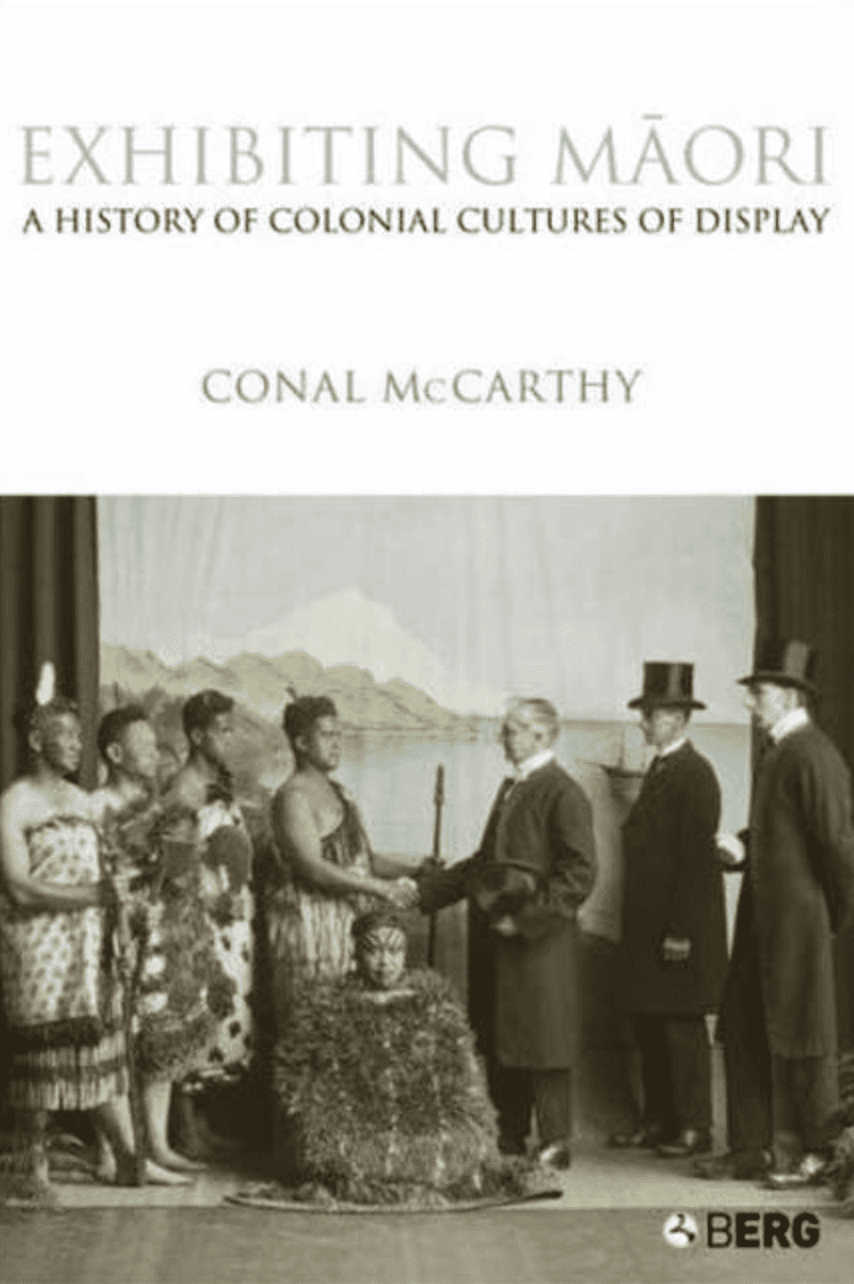
An example of this ‘posited criteria’ about which McEvilley speaks is a 2011 extract by art historian Conal McCarthy (University of Victoria). He employs the same central/marginal (major/minor, right/wrong) binary Curnow uses but does so obliquely. Indirectness comes as a result of his utilising other voices to say what he himself seeks. This layered approach (sometimes covering information opaquely) tends to bury his intention a little. Bear with me (the verbosity is purposeful and will require some patience here) as I work through his text making its structure and key underlying ideas a little more visible. I am aware many reading this post may not understand New Zealand’s local museum politics nor recognise a wider intention: a revisiting the vital contribution regional New Zealand has made to the visual arts.
McCarthy’s approach feels, perhaps inadvertantly, in sync with that of the current UoA gatekeeping (anathema to the publicly stated position of the current Vice Chancellor) described above. What he is doing is gathering, and therefore controlling, the narratives dealing with Māori exhibitions and Māori display culture dating back to the nineteenth century. The people who control your stories control you. The tone of his publication is informative but conservative and fully in line with the institution (Te Papa Tongarewa) for which he worked. Their kaupapa privileges ideas about ‘authenticity’ and a series of protocols developed throughout its 19th , 20th and 21st century institutional history. It is a centrist account relying on nationalism and a conservative tribalism that tends to place quite a tight lens on the past – as it applies to Māori. Given the singularity of focus and the conflict of interest found in an institution publishing and funding a book about itself, the conclusions McCarthy draws are surely open to debate. However, a reader may struggle to locate any vigorous enquiry into these texts. Are New Zealanders really happy having their museological narrative laid down in such centrist terms? And what role might, or should, the regions play in such an account?
The ‘Case Study: Collecting and Exhibiting Māori Art’ concerning the Sarjeant Gallery in Whanganui is covered then in a small segment of Museums and Māori: heritage professionals, indigenous collections, current practice, Te Papa Press, 2011. Here the book’s publisher claims the construction of an entirely ‘new’ history of curating Māori embracing both the largest and the smallest collections. Reader please note, there are really good things about this work. Its breadth of content, the range of collections, their diverse location and the broad time scale (considering the volume of material) attempted is astounding. At the time of its publication it was entirely new in its scope and a very welcome addition to public knowledge in this area. McCarthy also assembles a huge range of imagery that has never appeared in a singular location like this. This is important foundational work and a vital preliminary step to opening the area up.
However, Te Papa Press does make a number of assertions and here the author, at times, struggles to deliver. There is a discomforting superficiality, perhaps directed interest, in the attempt to cover smaller institutions and in the central discussion of Māori curators. Those in the Wellington museum profession, and those belonging to his former employer and to the publisher of the book, perform very well with large amounts of detail and focus. The tiniest or the smaller regional galleries – not so much. The operation of these adjusted lenses become problematic when the wide angle focus, being claimed, involving regionalism actually requires greater and much more carefully, detailed attention.
It’s worth having a look here at a more focused account of the Sarjeant Gallery in Whanganui by Mina McKenzie, former Māori President of AGMANZ and Director of the Manawatū Museum, that more fairly introduces the institution and sets the scene. The Māori shows run by the Sarjeant are, in McCarthy’s account, treated more as a reaction to the blockbuster show touring the United States. McCarthy’s reference to my curatorial contributions (as with the previous 2007 book Exhibiting Māori and the shonky chronology above devised by Paul Tapsell) is a postscript in a chapter entitled ‘After Te Māori’.
Some might consider the view from the margins quite differently. Former Sarjeant curator Derek Schulz (in a 1989 Art New Zealand article ‘The Gallery at its Limits’ also featuring commentary from Ngapine Allen) more broadly positions the Sarjeant’s aggressive Māori exhibition programme, during the seven years briefly covered by McCarthy 1984-1991, against a background of national indifference (amongst critical commentators and a number of institutions) to contemporary Māori art. Schulz notes,
…the Gallery and its Director’s record over the last seven years in providing hospitality for Māori artists and their work. This has not been without risk to reputation. Upwards of seven major shows have been pushed through in that time, yet, even now, prominent European commentators are not interested in work that takes its bearings from grassroots Māoritanga.
Māori art is not, nor ever has been, simply about sacred, ‘authentic’ ethnologically endorsed taonga Māori or indigenous Māori. It is a much more eclectic, changing artform seemlessly and messily involving both past, present and future. Schulz is describing, ‘…work that takes its bearings from grassroots Māoritanga’. I can remember following Matchitt (my MA thesis topic – Buck Nin, left, Matchit, centre, son Maia filming WAR inside Dome, Sarjeant) to a lecture bravely espoused at the University of Waikato in 1987. His kōrero provocatively entitled, ‘Where to from Te Māori’ challenged an audience enthralled with the traditional. How could they not be? This was the era of te hokinga mai ‘the returning’ of Te Maori to New Zealand galleries. For a moment of time there was enormous local pride in traditional Māori art affirmed by prestigious American institutions. If the media was to be believed New Zealanders were changing their minds about the ‘local indigenous stuff in their institutions’, perhaps not the same antipodeans Schulz had in mind. It was an exciting time for those, like myself, studying Māori art. I was doing a thesis on Matchitt but I was also a kaiarahi ‘guide’ along with lots of others for the Auckland Art Gallery version of the exhibition. See the most recent MaC posting ‘Te Maori and its’ Legacy‘
So it was against this kind of background that Matchitt unpopularly was critiquing the ethnologically endorsed Rotorua School and offering comment on other national organisations replicating and endlessly copying the past with little inspired thought about experimentation, creativity and the future direction of the artform. This position helps put McCarthy’s Te Papa-centric ideas about museum history in perspective and within a broader continuum involving a more appropriate contemporary and a more panoramic national (i.e including the regional) context. Dilating the focus helps enlarge what McCarthy (and others) may be deliberately playing down.
McKenzie, writing for an Australian readership, is useful here in relation to the focus on TeMāori. She situates the show more properly within a longer continuum and within a much more inclusive context:
While Te Māori served to change attitudes to the interpretation of traditional Māori material cultural property, it had not addressed the place of contemporary Māori art within the context of either Māori or the ‘fine arts’ communities. Whatu Aho Rua takes the next vital step in bringing together traditional and contemporary Māori art within the context of art gallery and presenting it as a continuum within Māori society.
McCarthy’s Sarjeant account makes no such claims about continuum but rather allocates a subsidiary role beginning in 1984 with Te Puawaitanga o te Kākano (a collaborative show with Paratene Matchitt and the organisation Ngā Puna Waihanga over which he was President). The name appears a homage to anthropologist Sidney Mead’s seminal Te Maori essay employing a plant metaphor to talk about the ‘flowering of the seed’ cycle in the art. There is however greater subtlety here. The show and its work, by living Māori artists, is not a theoretical construct about Māori art in some classical renaissance, it is referencing ‘the’ current flowering – te puwaitanga kei roto i te whare o Rehua – within the walls of the Sarjeant Gallery.
McCarthy then goes on to mention the Sarjeant is host in 1985 to an exhibition exploring collections of ‘contemporary’ Māori art. Curiously he will not name it – does he know/not know, perhaps the details are not at hand? The show, Contemporary Works by Māori Artists from PublicCollections, and its purpose are clearly outlined by a heritage historian (see MaC I) documenting Sarjeant history.
This exhibition and supporting catalogue highlighted the woeful attention to collecting in this [i.e contemporary Māori] area (with the exception of the work of Ralph Hotere) across the country.
One of those key areas of disinterest in living Māori art had been some of Wellington’s institutions. Artists complained about very poor treatment by the New Zealand Academy of Fine Arts (established 1882) and by the Dominion Museum anthropologist W.J Phillips (inheritor of an ultra-orthodox legacy begun by founding ethnologist Augustus Hamilton – see MaC IV) who made public statements denigrating toi hou rangatahi. A diplomatic Cliff Whiting, while not naming (my additions in parentheses) the people, names the issue and centres it where it initially belonged – in Pōneke:
Two or three people said Māori art was dead; some of us had an exhibition in the 1960s [NZ Fine Arts Academy] and a well known anthropologist [i.e. W.J Phillips, Dominion Museum, Wellington] said “This is not Māori art.” In actual fact, what they were really saying is that what is hung in museums and a few houses around was their idea of what Maori art should be...(1) We’re still recovering from what museums and ethnologists did to Māori art in terms of restricting the breadth and creativity of what was seen as Māori art.(2)
(1) Darcy Nicholas, 7 Māori Artists, 1986: 10
(2)Ian Christensen, Cliff Whiting:He Toi Nuku, He Toi Rangi, 2013:132
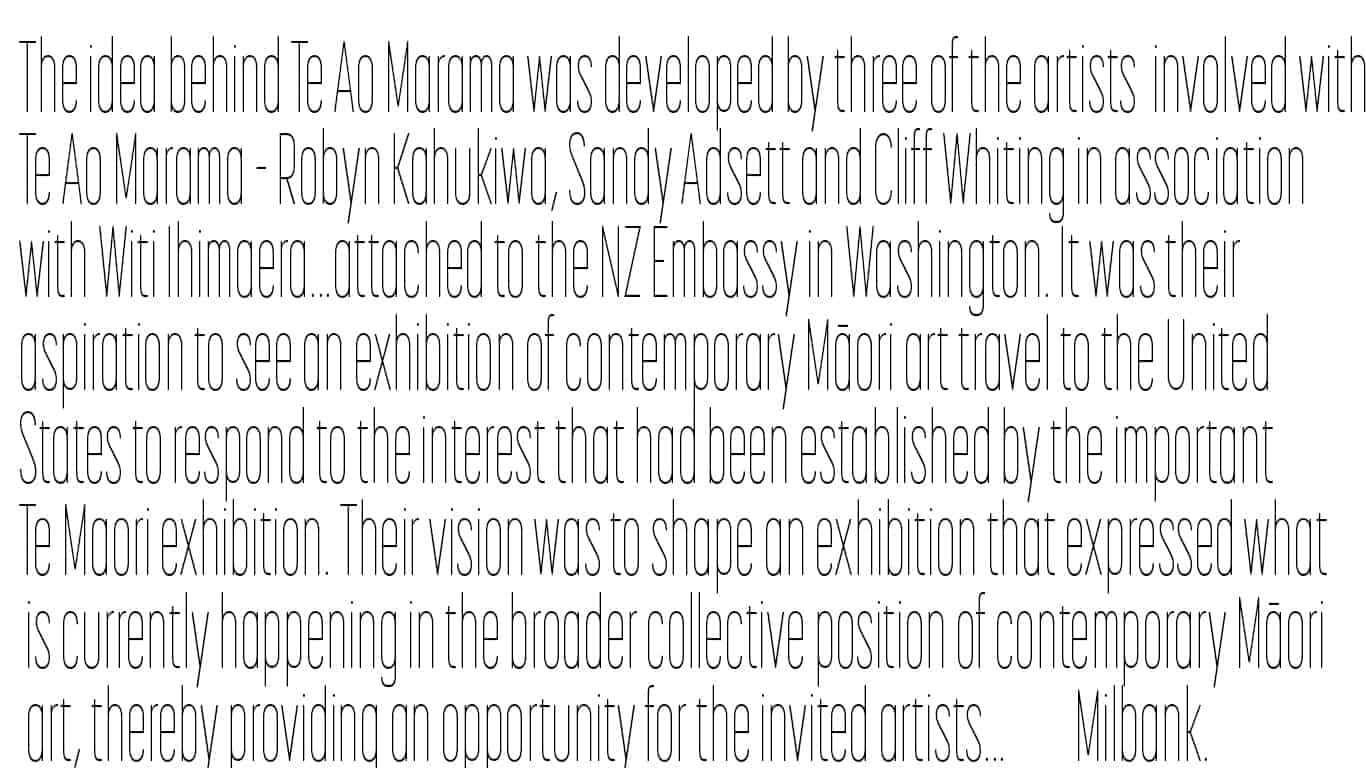
McCarthy’s editing of the Sarjeant account is selective. He follows a conservative trajectory largely because his is essentially an institutional account emerging from within a national context, funded and published by the Museum of New Zealand. The editing of the Sarjeant’s Māori exhibition legacy resonates aspects of this heritage. It next references a travelling exhibition Te Ao Marama [: Seven Māori Artists] deliberately positioning it alongside the bigger, more important, attraction, Te Māori, finishing its American tour and beginning another around New Zealand museums (including the Auckland Art Gallery and the National Museum) at the time. I quote the passage in its entirety highlighting portions useful to my commentary:
This exhibition [i.e ‘Contemporary Works by Māori Artists from Public Collections,’ 1985] was followed by the largest and most successful project of all, Te Ao Marama: Seven Māori Artists, a touring exhibition with an accompanying book. By this time, Milbank was addressing Māori staffing issues and had appointed Te Rangihīroa Panoho as an education and public programmes officer. Panoho effectively became a curator of contemporary Māori art and developed three significant exhibitions in the late 1980s and early 1990s. The first Cultur[e] [/] Response: Two Views in 1988, was a controversial take on the issue of pākehā artists such as Gordon Walters ‘appropriating’ Māori symbolism, an issue further explored in the Headlands exhibition at the National Art Gallery a few years later. The second was Whatu AhoRua in 1989, which explored the interweaving of change and tradition through contemporary and traditional elements in Māori art, and was staged alongside a current exhibition called Te Ao Māori, which was developed in consultation with writer Witi Ihimaera. Though art exhibitions without large numbers of old taonga, these shows were accompanied by the sort of opening ceremonial that was starting to become standard practice at museum exhibitions. The idea with these exhibitions, as Milbank remembers it, was, ‘putting together Māori material from museums seen as artefacts, letting it be seen as art alongside contemporary art, and looking at the links between traditional and contemporary.’ The third exhibition was Te Moemoea no Iotefa: The Dream of Joseph in 1990-1991, which was the first time New Zealand audiences were exposed to a significant display of contemporary art by Pacific Island artists based in New Zealand.
Conal McCarthy, Museums and Māori: heritage professionals, indigenous collections, current practice, Te Papa Press, 2011
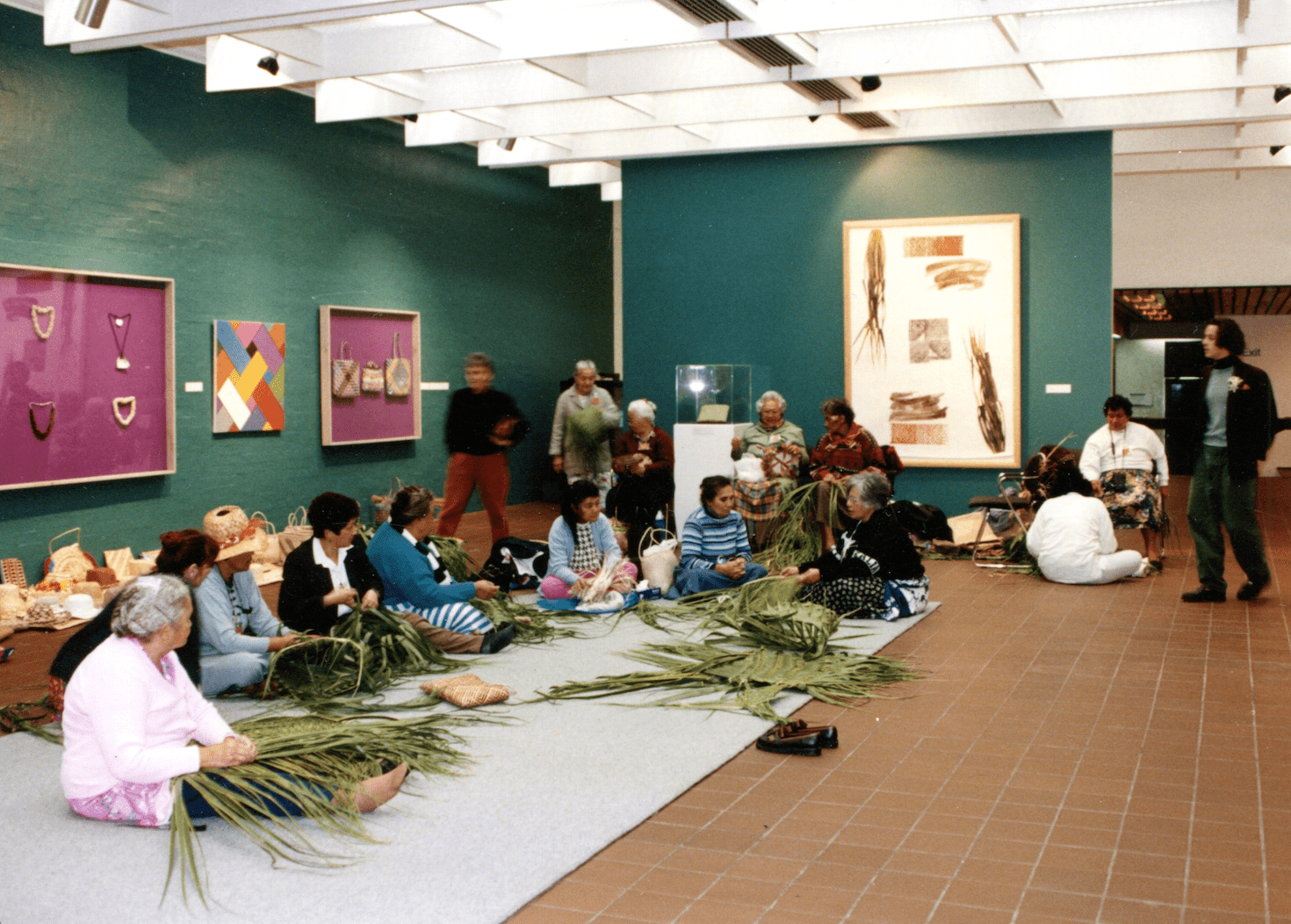
A number of areas in the above exhibition history, are either incorrect, are too casually underplayed or they are deliberately overplayed. Firstly, I was initially employed under the job description of Extensions Officer in 1988. It was Conal who was the Education Officer for the National Art Gallery. I worked with him on a number of presentations connected with the NAG Headlands programme (19 and 30 September and 4 October 1992). Regarding position, there was no ‘effectively became’. The Whanganui Council officially acknowledged me as Curator in 1989. The reference to Te Ao Marama as the ‘largest and most successful project of all’ is highly unlikely and is coming from another individual(s) with a vested interest in the show. The photograph supplied to McCarthy of Te Ao Marama, in its original Whanganui context, puts the story in perspective. The show is small occupying one of the side wings of the gallery (there were 5 possible spaces including the central dome). McCarthy mentions Darcy Nicholas’ 7 Māori Artists as accompanying the show. However, there is no reference to the exhibition Te Ao Marama nor any acknowledgement of the Sarjeant Gallery in the book. This ommission is despite the fact that 37 objects illustrated in the publication appear to be the inventory for the show. The book, it seems, came out after the show and without the usual Sarjeant logo, directors foreword, acknowledgements…and would almost certainly have been published separately in 1986.
‘After Te Māori’, both the title and the space devoted to the concept in McCarthy’s book, suggests Whanganui’s Sarjeant Gallery is an afterthought. The artists involved in Te Ao Marama read as part of a wider national scheme intent on following up on the international success of TeMaori. And while some artists and the Director Bill Milbank did talk this way about the show what is achieved in Whanganui is far more important than simply contrapuntal, knee jerk reaction in the regions. Rather Whanganui was actually, for a brief window of time – the 7 years McCarthy covers – literally re-centering Māori exhibition culture with modest resources and the enormous energy and focus Schulz earlier noted.
What I am suggesting here is this re-alignment deserved far more careful and detailed attention by the Wellington based art historian. The Māori curatorial history at the Sarjeant is every bit as important as the more successful phases of Māori curatorial history that were to occur later in the capital’s central institutions.
Milbank, in the previously referenced statement in 1988, puts responsibility back on Māori artists with particular reference to Te Maori. The tone of his text (i.e. altruistic ‘their’) suggests the Māori community driving this focus in line with a core belief he espoused that the gallery was merely responding to the energies of community. However, neither the Sarjeant nor its Director’s response was ever entirely passive. The genuine openness, Milbank defines, to Māori involvement (including myself) and the support of an amazingly generous Whanganui District council helped sustain, for nearly a decade, a remarkable focus on collecting, exhibiting and travelling ‘contemporary’ Māori art. You don’t find McCarthy talking this way because the grim reality for the geo-political centre, earlier on in the 1980s, was, that besides Te Māori, there were no such sustained (emphasis on equivalence here) foci on ‘contemporary’ Māori visual culture in New Zealand’s Metropolitan centres. Returning to McEvilley’s earlier thoughts about collective control, a fairer account of the Sarjeant’s Māori curatorial history doesn’t really fit in with the centrist criteria he is positing. Is this a broader problem in the way New Zealand bureaucracies and institutions like to redefine our histories?
Opening ones institution up to greater scrutiny (emic in origin), regarding weakness, is not kosher. In relation to McCarthy’s omission, of information surrounding Contemporary Works by Māori Artists from Public Collections, I had experienced first hand the state of these holdings. I regularly visited and viewed many of these collections, including the National Art Gallery (McCarthy’s former employer), prior (as a Masters student) during and after the period referenced by the show. In fact, the lack of support for Māori art in collections (with the exception of Ralph Hotere whose aesthetic and subject matter was often close to that of venerated Colin McCahon) led to the Sarjeant asking me to develop a policy for building up a better, more balanced Māori art collection (this is exactly what I am describing during this AGMANZ panel sitting next to a younger Greg McManus in the previous image). The research enquiry into national collections of Māori art and the attempt to develop a strategy locally, to address the gap, was years ahead of its time. Further, the wider disinterest from the centre, rather than simply the more obvious desire to replicate the success of Te Māori, more pragmatically explains why Ngā Puna Waihanga, ‘The Māori Artists and Writers Society’, not only bothered but felt comfortable with Whanganui as a prime portal for their visual culture at the time. Carefully cultivated elationships matter, regional histories matter.
When artists did get a rare opportunity at this time to work in the National Art Gallery, Buckle Street, Wellington the content could be extremely critical of the centre. Matchitt’s Te Wepu ‘the whip’ in the Huakina ‘elevate, raise up’ installation (see also my description in Te Papa Press essay in previous link), 1986, a resurrection of a poorly conserved battle flag (in the National Museum, allegedly torn up for rags by cleaners) flown by nineteenth century separatist leader Te Kooti Rikirangi in wooden assemblage, was portentious. Rather than selecting the types of objects displayed downstairs in Te Maori as his muse Matchitt deliberately chose a genealogy and a ‘folk’ object rejected by the national institution. ‘Te Wepu’ (Matchitt’s inspiration), the whip that Te Kooti promised would soon be applied across our lands, was far too resonant of nineteenth century Māori rebellion and of a rejection of colonial authority. Matchitt’s seditious battle pendant and the wooden structures that resonated ramparts and fortifications in Huakina ‘to raise up, to elevate’ could easily be interpreted as conceptually mapping out late twentieth century space. Everything about the rough untreated pine and demolition timber of Huakina is rupturing and piercing the primacy inferred in the more classical taonga on display downstairs.
What Matchitt had back in Whanganui was a space where he and his grassroots Māori arts community had tautoko tino. They were welcomed and supported for the next 5 years after which Ngā Puna Waihanga moved on to the National Art Gallery to do a large group show. I find the phase of time prior to this exhibition (curator Tim Walker’s 1993 Taikaka Kohia Anake) resonant in a kupu whakarite spoken by the Waikato King Tawhiao. Suffering his own isolation in Te Kuiti the Tainui leader understood deeply the mana of rivers and saw the West Coast colonial settlement as he matapihi o Niu Tureni, ‘the window of New Zealand.’ From 1984-1992 [1] the Sarjeant’s Māori art programme was indeed this window for Māori and museums regardless of whether Conal acknowledges it or not. I lived through it, I and others remembered it and knew it.
Perhaps the most powerful measurement of the importance of the Sarjeant shows, that McCarthy fails to deliver detail on, has to do with how others (see for example indigenous commentators like Hetti Perkins and MinaMcKenzie) in the media and within the profession assessed them both during their display and subsequently. Despite McCarthy’s claims regarding Te Ao Marama there is no ongoing evidence for its scale nor its critical importance. This is of course a very difficult expectation to place on any exhibition created in the regional areas of New Zealand. Whanganui is not geographically central, it lacks the larger financial and human resources of major New Zealand city galleries. It is heavily reliant on sponsorship for the survival of its shows and there is huge pressure to create great content that will attract interest and wider support. The past and the ongoing response to two Sarjeant shows (WAR & Te Moemoea) and a more truthful rendition of their achievements, that McCarthy tends to underplay, may then surprise some.
Your work with the Whatu Aho Rua exhibition established your reputation in Australia as the most innovative curator of contemporary Māori art in Aotearoa/New Zealand.
Julie Ewington, inviting a keynote address at, ‘Contemporary Culture and Curators’ conference, Museum of Contemporary Art, Sydney 18 September 1994
Following its initial Australian success at the Adelaide Festival, this major exhibition of Māori art will inform and excite Sydney audiences with its diversity of artistic practice drawn from current and historical Māori culture.
Ivan Dougherty Gallery, University of New South Wales, Press Release, WAR, 1-29 August 1992 Ivan Dougherty
In Australia Whatu Aho Rua was seen (at least for a couple of years) as a flagship show for new innovative work in contemporary Māori art curating from Aotearoa. This takes the show well outside McCarthy’s willingness to acknowledge a less important earlier show. Both the 1989 Whatu Aho Rua and Te Ao Māori (and the 1990 Te Moemoa no Iotefa with over 350 objects) occupied the entire floor space of the Sarjeant Gallery and the entire first floor of the Auckland Art Gallery including its historic Wellesley Wing airspace (masi – installation). They were exhibited in an Australian indigenous arts centre and recognised Australian galleries. WAR received supportive critical reviews in national and regional media including Art and Australia, Art and Asia Pacific, Art Monthly Australia, Art Link, The Canberra Times, the Sydney Morning Herald, ABC, Art New Zealand, The Chronicle, The Dominion.
Te Moemoea travelled to Auckland and Wellington’s premier art galleries. It was covered by TVNZ, and Radio (National, South Pacific, Student Radio). If success is measured by attendance and positive responsive feedback all venues suggest the exhibition was one of the more popular shows in New Zealand in the summer of 1990/1991. I only have data for the City Gallery, Wellington while Auckland Art Gallerywas a muchlarger venue. In Pōneke 13, 502 attended. Attendance at its’ Wednesday night series was up 80% and its school programmes attendance increased by 500%. The gallery, especially with its’ Education Staff promoting and marketing Te Moemoea, established a new Pacific audience and a living community involvement within its space.
Whatu Aho Rua and Te Moemoea no Iotefa were critically received by the art gallery and museum profession in their time. WAR was in demand (6 different venues) on both sides of the Tasman. It travelled to the Dowse Art Gallery, Lower Hutt shortly after it was the feature show of the 1989 AGMANZ annual conference held in Whanganui and the Ngā Puna Waihanga annual hui held at Ratana Pā, Turakina that year. In 1992, I redesigned its floor plan, with a brand new catalogue, new essay and revised inventory. Streamlined with 55 objects, some newly selected, it opened at the Kaurna Gallery of Tandanya, National Aboriginal Arts Centre for the Adelaide International Arts Festival before touring to the Canberra School of Art Gallery, Australia National University and lastly to the Ivan Dougherty Gallery, University of New South Wales.
Later in 1992 Whatu Aho Rua returned finally to the the Whanganui Regional Museum (a key partner in its lengthy development and a major source of its taonga). As with Te Ao Marama Whanganui hapū, kuia and elders and Māori artists accompanied the show at its different venues. Māori communities in Adelaide, Canberra and Sydney responded to it (i.e. as kaiarahi and in ngā roopu kapa haka) as the show made its way around the three Australian centres. It’s te hokinga mai was welcomed by artists, tāngata whenua, institutions and the local public in Whanganui. These events carried on over a lengthy 4 year time span (beyond McCarthy’s timeline for the Sarjeant, well into 1992) another indicator of the degree to which many institutions, artists and commentators believed in and actively supported it. Underplayed.
These Sarjeant exhibitions were not just nicely selected collections of artefacts they were shows deliberately testing their audience and stretching ideas about what the collecting, display and interpretation of these objects/taonga means. Margot Porter, a journalist for the Dominion, Wellington 1991, suggests to her readership a depth (behind Te Moemoea no Iotefa) that moves beyond the straightforward, the singular, the traditional, the orthodox and the obvious:
Cross-currents crackle around the latest exhibition at Wellington’s City Gallery. People who like to keep art in neat pigeonholes… will probably find Te Moemoea no Iotefa (Joseph’s dream defeats them. Rangihīroa Panoho…has curated a lively exhibition which aims to be a lot more than a showcase for artists with a Pacific Island background who are working in New Zealand. It is that, but it’s also a visual essay about cross-fertilisation.
Margot Porter, ‘Visual Essays of the Pacific‘, The Dominion, 20 July 1991
Te Moemoea No Iotefa invitation, City Gallery, Wellington, 1991
Nor did an interest in these exhibitions stop with the timeline McCarthy offers. Rather these Sarjeant shows continue to be critically acknowledged and remembered today. In the voluminous Art in Oceania (Thames and Hudson, 2012), covering Pacific Art, one of the contributors art historian Dr Peter Brunt in Part VI, ‘Contemporary Pacific Art and Its Globalization’, Art in Oceania: A New History, succinctly saw the value of Te Moemoea to the Pacific community in Aotearoa as:
The first exhibition to focus on contemporary Pacific art in a civic gallery in New Zealand was Te Moemoea no Iotefa…The exhibition thematized the presence of Pacific culture in New Zealand society, introduced community-based arts like tivaevae into the contemporary gallery, and canvassed the work of migrant artists like Fatu Feu’u, Johnny Penisula, Michel Tuffery and others, only then beginning to garner serious public attention. But it was the title that was the most prescient about its own historical significance. The title was borrowed from the title of a tivaevae it showed, and refers to the biblical story of Joseph sold into slavery in Egypt by his brothers, eventually to rise to a position of power in the Pharoah’s court. Joseph’s dream turns out to be an allegory of the moment of recognition when, as an exile, he reveals himself to his brothers as the important person he has become. The ambiguity of the allegory lies in the question of whether recognition in Egypt or escape from Egypt (if we can pardon the Orientalism) is the preferable goal.
Dr Peter Brunt, Art History, UoV
What further measures of success then does an exhibition need to be properly acknowledged? McCarthy perhaps offers an answer to that question when he begins his next (final) paragraph, outlining the Sarjeant’s contribution to Māori exhibitions, further positing criteria:
rangihīroa, Use Only Old Carvings, 2017
‘Though art exhibitions without large numbers of old taonga, these shows [i.e the exhibitions Whatu Aho Rua and Te Moemoea no Iotefa] were accompanied by the sort of opening ceremonial that was starting to become standard practice at museum exhibitions.’
The chapter Raruraru ki te Puna ‘trouble at the spring’ (pp.138-173) in Maori Art is devoted to unpackaging the idea that centralising thought processes, protocols and resources (the DNA of a number of Wellington institutions and the Rotorua School set up under a law passed by parliamentarian Sir Apirana Ngata) is not necessarily helpful to nurturing creativity within an indigenous culture. Copying ‘old’ carvings, stringently using them as models in art, conserving and maintaining them in storage and presenting them in permanent displays may solve the problem of potential loss of visual legacy but it hatches a range of new issues that have yet to be tested curatorially in Aotearoa. How, for example, does an indigenous visual culture maintain floriferous creativity, more naturally, outside a winter of colonisation and outside those powerful regions of national culture deemed to be the centre?
rangihīroa, Rongopai Rose, 2020
The next post looks at the legacy of one of the earliest promoters of authenticity in Māori art: Dominion Museum Director Augustus Hamilton and his book MAORI ART as MaC IV continues.
NZ Arts Industry statements of support for curating
ACKNOWLEDGEMENTS NGĀ WHAKAWHETAI
‘There have been no focused strategies, no foundational initiatives, no convergence of influence or development of critical mass created by the sector to provide contemporary Māori art curators with opportunities to evolve our curatorial practice further. Most of the expansion of contemporary Māori art curatorial practice I would submit has been self-seeded and created by the art curators themselves….It is clear that the curatorial field I inhabit has not been actively grown when my curatorial position is one of only two dedicated contemporary Māori art curatorial positions in the country. I am probably the most established, having a curatorial career that spans 26 years and in a position that progressed from an initial 10 month internship founded at the National Art Gallery in 1990 to what is now the Curator of modern and contemporary Maori & Indigenous art at Te Papa.’
Megan Tamati-Quennell, Curator of modern and contemporary Māori and Indigenous art at Te Papa Tongarewa, 2016
‘In 198[8] the gallery employed Rangihīroa Pan[o]ho, the first Māori to be employed as a curator in a New Zealand art museum (and also the first Māori to secure a [Masters] Art History degree) as a member of the staff. In 1989 he curated the ground-breaking exhibitionsWhatu Aho Rua, which was shown at the Sarjeant in conjunction with an already formed contemporary artists show called Te Ao Māori. In 1991 Whatu Aho Rua was reconfigured by Pan[o]ho and was toured by the Sarjeant with full escorting support from Whanganui Iwi to four important venues in Australia before closing at the Whanganui Regional Museum. Also in 1990 he curated the spectacular and ground breaking Te Moemoea No Iotefa, which went to Wellington and Auckland. This exhibition was the first to bring together traditional Pacific Island craft with contemporary craft and the work of contemporary Pacific Island artists.’
Chris Cochrane, Heritage Assessment for the Whanganui District Council, Sarjeant Gallery, 2012: 19
‘I flew to NZ to visit Mr Panoho from Tonga (where I was working on gender and art) and saw his outstanding Te Moemoea No Iotefa. The exhibition was well orchistrated, each room had its own logic and functionality. The artworks were diversely discursive, often providing alternative cultural critiques to contemporary idioms and issues of appropriation. The veracity of the exhibition was clearly due to his ability to establish a relationship of trust with the artists.’ (1) ‘Panoho works primarily in the field of taonga and contemporary Māori Art, theory, criticism and cultural studies. This is a demanding field that forces him to always be on the cutting edge – which he is – with a careful balance of historical depth, agile insight and sagacious theory into relevant current issues. Panoho’s catalogue texts (e.g Whatu Aho Rua and Te Moemoea no Iotefa) are a good case in point; they challenge the way Western art historians think about the context of art and suggest that we stop canonizing contextual categories and move towards a better understanding of contexts that brings “traditional” and contemporary Māori art more forcefully into play.’ (2)
Jehanne Teilhet-Fisk, Professor Emeritus, Visual Arts Program, University of California, San Diego, writing to Art History Department, University of Canterbury, 10 February 1992 (1) and the University of Auckland, 11 October 1996 (2)
‘We are contemporaries. We did Art History together in the early eighties at the University of Auckland. After completing his Masters…thesis on Paratene Matchitt Rangi joined the Sarjeant Gallery in 1988 working as Curator Māori. He was part of a new wave of young art museum curators at that time which also included Greg Burke, Tina Barton and myself.’
Robert Leonard, Chief Curator, City Gallery, Wellington, 25 August 2016
Writing ‘Maori Art’ presentation City Gallery, Wellington. Panoho (far left) Robert Leonard (Chief Curator – rear left) Elizabeth Caldwell (Director – rear right) and panel members Megan Tamati-Quennell (Te Papa) and Dr Peter Brunt (Victoria University), 25 August 2016
‘Curator: that was the guy carrying the hammer’, Interview, Rangihīroa Panoho and Fred Graham, Auckland Museum, 2016
Gould Street, Russell, 17 Nov. 1986
Tēnā koe Rangihīroa
I read your letter with interest and noted that it’s a thesis on Para Matchitt. He is an important Māori Artist and earlier on in our careers we worked jointly on a number of projects. I congratulate you and hope you succeed in giving all a true picture of the man… I wish you all the best with your work and hope we meet sometime. Cliff.
Ōwairaka, 14 August 2017
Te Whanakao tou maunga Oraka tou punawai Kereu tou awa Ko Kaiaio tou hapū Ko Te Whānau-ā-Apanui tou iwi E Cliff, moe mai, takoto mai rā ki te poho o Te Atua. Hāere, hāere, hāere. Hāere ki Hawaiki nui, Hawaiki roa, Hawaiki pāmamao. Aroha ki tou whānau pani. Ka hinga te rakau rangatira, he kauri. I whakarongo au ki te paopao o tou tinana ki te papa ngaore o Pukauakua te pā o Te Ponaharakeke. Ae, ngāueue ana te ngahere. E Ihowa ka mahuetia koe ki ngā peka aweawe me ngā rau e whiti ana hei uwhiuwhi mo ngā manu e noho ana kei runga. Pakaru te ruruhau, e koheri ana te hau kawa ki te kete aronui. Nā reira, takoto mai e Cliff, kia tangihia koe e ō iwi. Ka ngaro koe, te kaihautū, te toi rangatira Māori, te kura whakahirahira o ngā uri o Pou, te mauri o te whenua, te mauri o te tangata, haere! Haere rā! arohanui nā Rangi
When looking at this image of Clifford and Paratene in Hamilton in 1966 I didn’t, until recently, think of curated shows. When I spoke to senior Māori artist Fred Graham in 2016 about this early period his recollection of the role was that, ‘The curator was the guy carrying the hammer.’ Too young for this era I was to feel its influence decades later, in 1986-1988, when travelling the country as a Masters student in art history doing a thesis on Paratene Te Mokopuorongo Matchitt. I have a vivid recollection of stepping through the same assembly hall doors in 1987. Inside that space there were more signs of the curatorial act than Graham conceded. Here, for the reader, I am quickly resorting to all of the broader permutations of the word curator, cūrāre (14th century Latin meaning), the Scottish concept of the legal guardianship, the Ecclesiastical function of pastoral care or nurture, the Māori concept of kaitiakitanga and so on. I can’t detail any of these concepts here but I intend all of them because I am describing a function that is necessarily atavistic and cross-cultural with a huge range of layers and complexities that make it what is has now become (not only in the world but in Aotearoa and in institutions across the Asia Pacific).
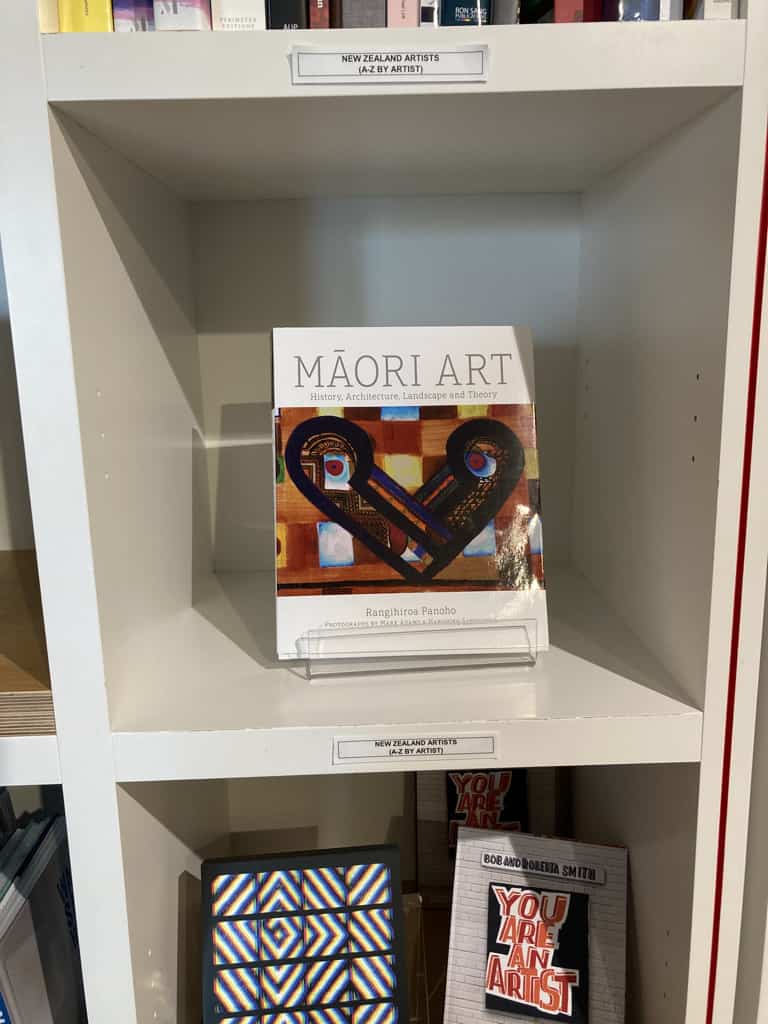
Maori-Kunst sprechen ‘Let’s talk Māori Art’. This is part of the work I do with international clients helping them understand some of the key areas that make Māori a unique global artform. The kaupapa of my kōrero follows aspects of the book ‘Māori Art’ but is specifically related to objects or architecture in the Auckland central city area. I used to walk around Auckland landscapes and cultural collections with students but I find working with the public (individuals or small groups) just as challenging and, in a number of respects, more rewarding. If anyone is interested in looking further at what our small family based company Pihirau offers visit other areas of this site and also look at my other contributions in the publishers public site for the book ‘MĀORI ART, History, Architecture, Landscape and Theory‘: www.facebook.com/maoriartbook/ or you could search my professional contributions on LinkedIn https://www.linkedin.com/in/dr-rangihiroa-panoho/ or my Instagram site www.instagram.com/rangihiroa/ for creative work.
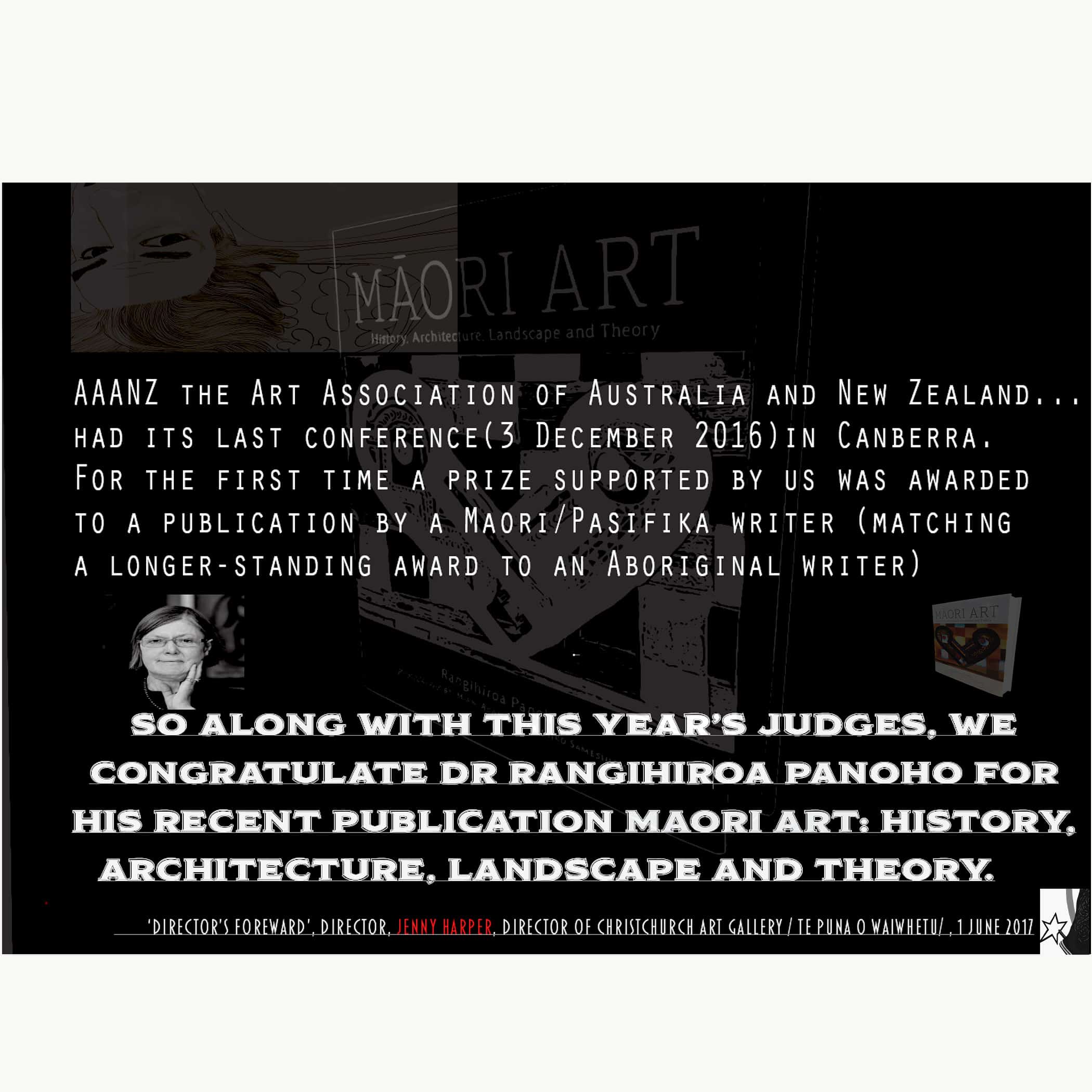
‘Māori Art’ winner AAANZ book prize presented at the School of Art, Australia National University, Canberra, 3 December 2016 . This is an international award in the discipline of Art History.
Best Art Writing by a New Zealand Māori or Pacific Islander
($500 supported by Christchurch Art Gallery)
Jenny Harper Congratulates Rangihiroa Panoho as an AAANZ Award winner
This prize was awarded to the best art writing, whether in the form of a book, article or essay, by a New Zealand Maori or Pacific Islander.
AAANZ annual prizes recognise the best in arts writing and research across Australia and New Zealand. The awards cover a broad array of arts publishing and acknowledge the contribution of both emerging and established scholars and artists. The categories include prizes for books, catalogues, artist books and Indigenous art writing. The prizes are sponsored by a number of universities, art museums, associations and publishing bodies around Australia and New Zealand. The prizes recognise the following. Originality and rigour of scholarship. Contribution to knowledge in the area and impact on scholarly debate in the field. Significance of the topic to the field and to adjacent disciplines. Significance and originality of arts research. Quality of the design and production values of the publication. Ability to convey complex ideas to wider audiences.
Ngā Kupu Māori awards, Auckland Museum 3 October 2016
A collection of creative projects in which I have been involved. There is no specific taxonomy employed here to make past work fit categories. I add them as postings as I locate and process the material.
FLIGHT CROWDS 1985
Camera: Neil Pardington Lighting: Vivienne Smith Sound: Gregory Brice Sound: City Group Figure: Rangihiroa Panoho Research: Ron Brownson
Film Location:
Ron Brownson, City Group, Flight Crowds, 1985
Reference # F38731
New Zealand Archive of Film Television and Sound
This was an early short film project that I was involved in. I was a 22 year old arts student at the time about to begin my Masters in Art History at the University of Auckland. Along with Tina Barton I worked one summer as a Research Assistant in what is now the Eric McCormack Research Library, Auckland Art Gallery. Brownson ran this resource at the time.
Ron Brownson, Vivienne Smith (lighting gels) and Neil Pardington (camerawork) Grafton villa, 1985
Two locations were used for the film. Much of the work centres on the technical effect of the various coloured gels used by Vivienne Smith to shoot intense closely cropped shots of the eye. All visually cooked up in the kitchen of Brownson’s 19th century lean to on Seafield View Terrace in Grafton, Auckland. I have still have clear memories of floorboards in the house sloping because old piling and film for the project being retreived from an empty fridge. The last part of the ‘Flight Crowds’ involves imagery selected from a much longer section shot in Coromandel.
Ron Brownson, Karangahake Gorge Railway tunnel overbridge, Coromandel, 1985
This outdoor location at the end of the film involved a shoot inside the Karangahake Gorge Railway tunnel (site of the original Coromandel gold rush in 1875). The light at the end is the opening of the tunnel on the overbridge that majestically sits above the Ohinemuri River. Designer/photographer Neil Pardington did the camera work. Ron Brownson was obsessively involved in both directing and organising the shoots in these two very different locations. The film premiered inside an Auckland University theatre (Architecture I think) and, fashionably, it was not well received. The reception for me felt unusual because I was the private and anonymous viewer having my eye projected enormously and so publically as a central screen leit-motif. Long before the film finished people began throwing things at it. Perhaps today coins would not be the missile of choice for the more frugal twenty first century Kiwi student venting disapproval. Perhaps they might just resort to pulling out the i phone and writing an angry review!
Ron Brownson, Neil Pardington with camera inside Karangahake Gorge Railway tunnel, Coromandel, 1985
Used by Google Analytics to determine which links on a page are being clicked
30 seconds
_ga
ID used to identify users
2 years
__utmb
Used to distinguish new sessions and visits. This cookie is set when the GA.js javascript library is loaded and there is no existing __utmb cookie. The cookie is updated every time data is sent to the Google Analytics server.
30 minutes after last activity
_gac_
Contains information related to marketing campaigns of the user. These are shared with Google AdWords / Google Ads when the Google Ads and Google Analytics accounts are linked together.
90 days
__utma
ID used to identify users and sessions
2 years after last activity
__utmz
Contains information about the traffic source or campaign that directed user to the website. The cookie is set when the GA.js javascript is loaded and updated when data is sent to the Google Anaytics server
6 months after last activity
__utmt
Used to monitor number of Google Analytics server requests
10 minutes
__utmc
Used only with old Urchin versions of Google Analytics and not with GA.js. Was used to distinguish between new sessions and visits at the end of a session.
End of session (browser)
__utmv
Contains custom information set by the web developer via the _setCustomVar method in Google Analytics. This cookie is updated every time new data is sent to the Google Analytics server.
2 years after last activity
__utmx
Used to determine whether a user is included in an A / B or Multivariate test.
18 months
_gat
Used to monitor number of Google Analytics server requests when using Google Tag Manager
1 minute
_gid
ID used to identify users for 24 hours after last activity
24 hours
Vimeo is a video hosting platform for high-quality content, ideal for creators and businesses to showcase their work.
Used to detect if the visitor has accepted the marketing category in the cookie banner. This cookie is necessary for GDPR-compliance of the website.
179 days
LOGIN_INFO
This cookie is used to play YouTube videos embedded on the website.
2 years
VISITOR_PRIVACY_METADATA
Youtube visitor privacy metadata cookie
180 days
GPS
Registers a unique ID on mobile devices to enable tracking based on geographical GPS location.
1 day
VISITOR_INFO1_LIVE
Tries to estimate the users' bandwidth on pages with integrated YouTube videos. Also used for marketing
179 days
PREF
This cookie stores your preferences and other information, in particular preferred language, how many search results you wish to be shown on your page, and whether or not you wish to have Google’s SafeSearch filter turned on.
10 years from set/ update
YSC
Registers a unique ID to keep statistics of what videos from YouTube the user has seen.


 Michael Illingworth, portrait of Augustus Hamilton, bronze statue five years before the ethnologists death in 1908. Behind Hamilton are kōwhaiwhai images reproduced in his voluminous Art Workmanship of the Māori Race


 Maori-Kunst sprechen ‘Let’s talk Māori Art’. This is part of the work I do with international clients helping them understand some of the key areas that make Māori a unique global artform. The kaupapa of my kōrero follows aspects of the book ‘Māori Art’ but is specifically related to objects or architecture in the Auckland central city area. I used to walk around Auckland landscapes and cultural collections with students but I find working with the public (individuals or small groups) just as challenging and, in a number of respects, more rewarding. If anyone is interested in looking further at what our small family based company Pihirau offers visit other areas of this site and also look at my other contributions in the publishers public site for the book ‘MĀORI ART, History, Architecture, Landscape and Theory‘:


 Tracy Borgfelt, Batemans Associate Publisher (right) Kikorangi and Adrianne Panoho (left), Ngā Kupu Māori awards, Auckland Museum 3 October 2016















![Cultur[e] [/] Response: Two Views in 1988](https://pihirau.co.nz/wp-content/uploads/2020/12/CultureResponse88195-scaled.jpg)